The Sketches Weren't Signed Back Then
Hundreds of pieces have been written about this body. They repeat the same three facts: who designed it, why the car was discontinued, and how many were built. I checked all three.
In this issue
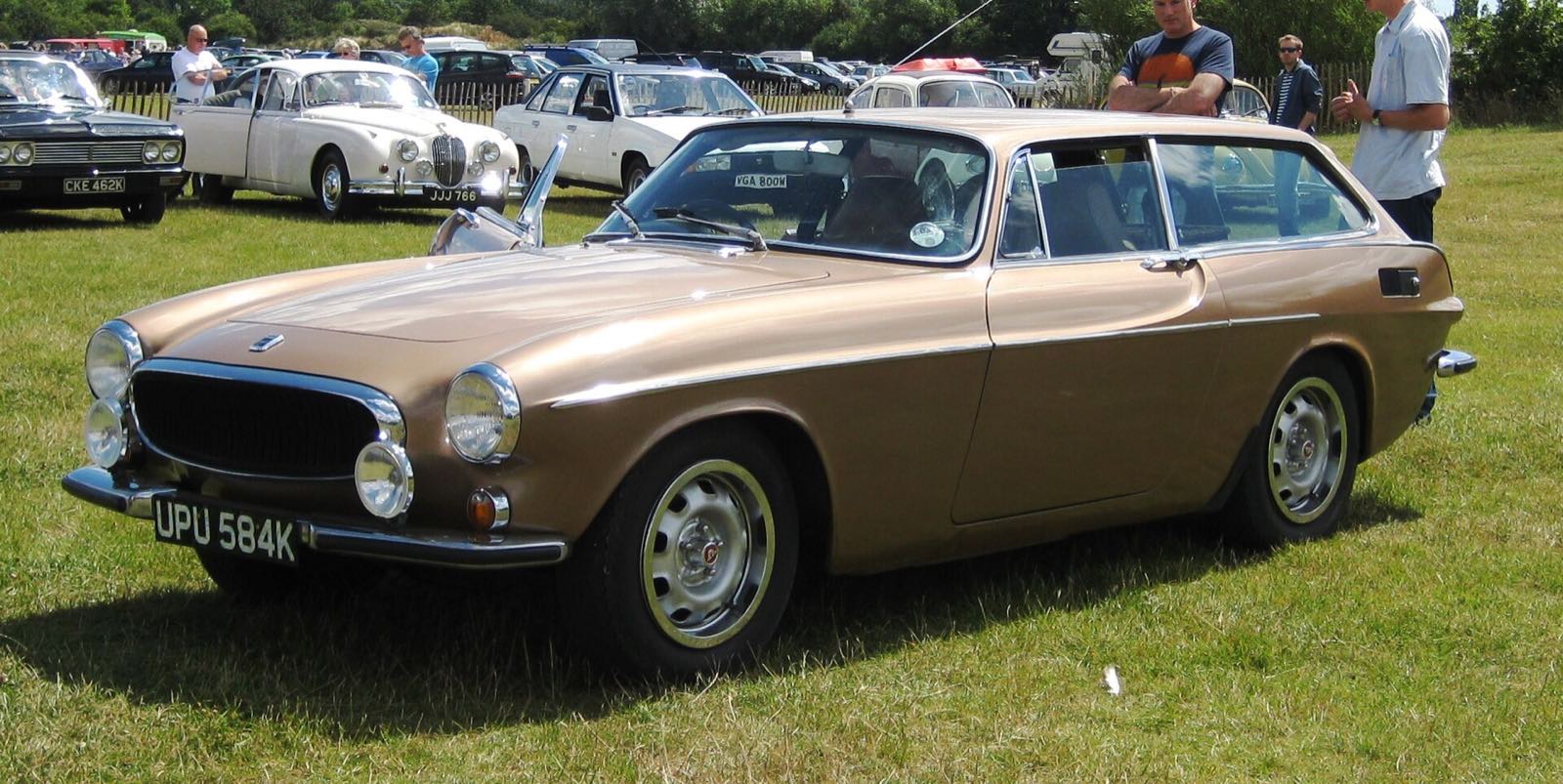
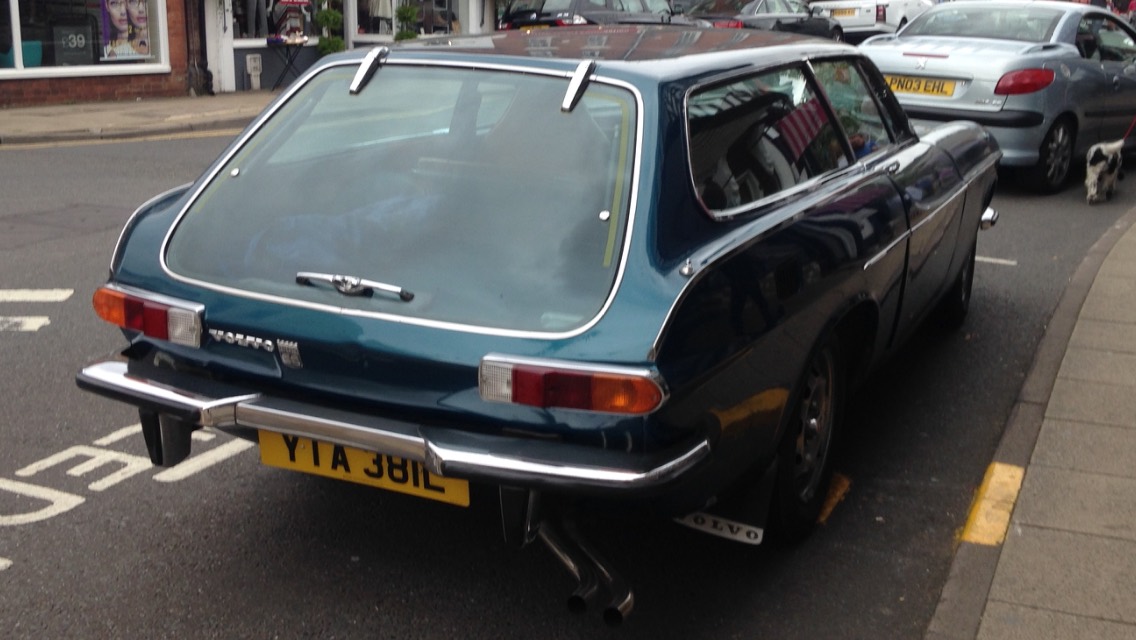
A beautiful car. A coupe with its roof extended towards the rear. A glass tailgate with no frame, its hinges bolted directly to the glass. It is the kind of photograph one wants to linger over, and people have lingered over it many times. Hundreds of pieces about this body have appeared in at least ten languages.
They repeat three facts. Who designed it. Why it was discontinued. How many were built.
I set out to check all three, expecting to clarify a few details. Instead, I found that not one of them survives scrutiny, and each comes apart in a different way. One rests on a newspaper article nobody seems to have read. Another cites a regulation written almost four years after the event. The third simply fails when its parts are added together.
The fifth sketch
The story begins in a way typical of the late 1950s. Volvo wanted a sports car. It had no design school of its own, so it needed Italians. In April 1957 it signed a contract with Ghia, the Turin coachbuilder run by Luigi Segre. Four proposals were commissioned.
The process was organised by Helmer Petterson, a consulting engineer at Volvo and a man with standing inside the company. He had previously conceived the PV444, the car that put Sweden on wheels.31 July 1957was Pelle Petterson's twenty-fifth birthday. It was also the day he completed the sketches.
Helmer had a twenty-four-year-old son, Pelle. He had just graduated from Pratt Institute in New York and was working in Turin at Frua, the studio Ghia happened to acquire that same year.
What happened next is the kind of thing I expected to discover in an investigative article. I found it instead in a Volvo press release.
Helmer added a fifth proposal to the four commissioned designs. It was his son's work. He did not say whose it was.
The board chose that sketch. Volvo's own account says Helmer “sneaked in his son Pelle's fifth design”, and that was the proposal everyone picked.5
Gunnar Engellau, the head of the company, had wanted an Italian design and believed he had obtained one. When he learned the truth, he felt deceived and, again according to Volvo itself, declared that Pelle Petterson would never be acknowledged as the car's designer.
It is worth pausing over what we are reading. This is not an outside exposé. On its own website, the company describes how its chief, out of personal resentment, erased a man from the history of one of Volvo's best-known cars. It has kept that account publicly available for more than a decade.
Petterson himself explained how the deception was possible: “The sketches weren't signed and they didn't really know who was behind the sketches.” His father eventually had to tell Engellau that the young Swede had drawn them.6
Remember that sentence. It explains everything that follows.
The forty years that were not
Now for the reason this story is usually told. The accepted version says the real designer's name was suppressed for decades and recognised only in 2009. The stated interval varies: forty years in some accounts, more than fifty in others.
That is not true, and the contradiction is easy to find.
The Swedish newspaper Bil-Expressen wrote that “designer Pelle Petterson has done a good job” on 9 July 1961, during the car's first year in production.6 His name was not secret from the press. It was absent from Volvo's corporate account. Those are very different claims, and substituting one for the other makes the story more dramatic than it was.
A qualification is necessary. I have not seen that issue myself. The reference comes from the same private register that publishes the other documents, and I found no independent confirmation. If the register is wrong, the central claim of this section fails with it.
The date of the supposed recognition is more interesting still. It leads back to a single article: Lasse Swärd's “Volvo ger upprättelse åt P1800:s skapare”, published by Dagens Nyheter on 8 November 2009.7 The English-language Wikipedia article cites it, and dozens of publications have copied from there the claim that Petterson was “officially recognised only in 2009”.
I could not read it either; the archive is paywalled. So, as things stand, a claim repeated across the internet rests on an article that none of the people retelling it appears to have seen, myself included.
That also disposes of a neat detail often added to the story: that the recognition marked the model's fiftieth anniversary. The anniversaries fell in 2010, fifty years after the Brussels unveiling, and in 2011, fifty years after production began. There was no fiftieth anniversary in 2009.
The earliest official Volvo document I could open that directly names Petterson as the designer is dated 23 May 2011.5
Today the company's website uses careful language: “Italian-influenced styling by the young Swede Pelle Petterson”.8
Notice the order. The influence is Italian. The designer is Swedish.
This quotation also needs a qualification. Volvocars.com blocks automated requests from our address, so the wording comes from the search result for the page, not from the page itself.403is the response our server receives from volvocars.com, NHTSA and the US Federal Register.
The last car was number 8077
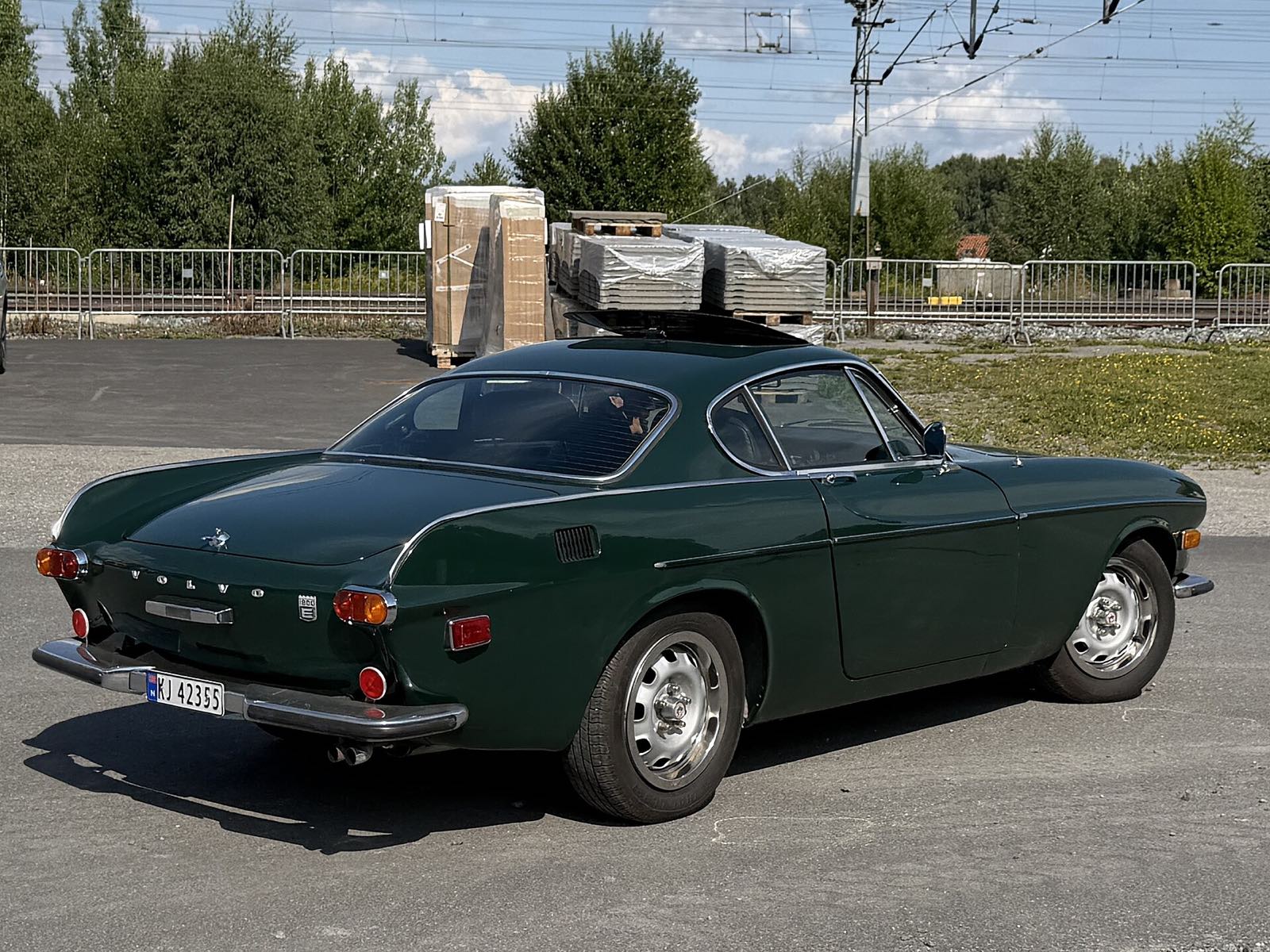
The ES estate, the one with the glass tailgate, appeared only in 1971, fourteen years after the sketches. The coupe's roof was extended backwards, the rear was cut off vertically, and everything else remained.
Production ended at two in the afternoon on 27 June 1973. The final car bore chassis number 8077.9
No one knows how many were built.
Volvo's official total is 8,078. The last chassis number is 8077. That one-car discrepancy has circulated through articles for years, and no one explains it. Hagerty manages to give both figures in the same piece.
The explanation seems to be mundane. What follows is my inference from comparing two registers, not an established conclusion. The two principal registers place the model-year boundary differently. In one, the 1972 run is chassis 1 through 3069; in the other, it is 1 through 3070. The boundary car closes one year in one register and opens the next in the other, shifting the entire sequence by one.
But there is more, and this is where it becomes funny.
The English-language Wikipedia article gives the accepted total for the entire 1800 family as 47,492 cars. The same table lists the components: 39,407 coupes and 8,077 estates.1047,484is what the figures printed in the same article add up to. The text says 47,492. Add them together. The answer is 47,484.
The figure 47,492 can be produced only from a different pair: 39,414 and 8,078. In other words, the most frequently cited table on this car combines two incompatible sets of figures, and for years no one has bothered to add them up.
There is a third layer. According to the factory build records, twenty-six chassis numbers were never built at all.26chassis numbers appear in the register but correspond to no car: 28234-28238 and 29980-30000. Subtract them and the canonical total stops making sense altogether.
The honest answer to “how many were built?” is dull. About eight thousand and eighty estates, 8,077 or 8,078 depending on the count, with the difference determined by where the model-year boundary is drawn.
The rule arrived four years later
One question remains, the best-known of all: why was the car discontinued? Everyone knows the answer. American rules requiring bumpers to withstand a five-mile-per-hour impact made redesign uneconomic. The explanation usually cites a specific regulation, Part 581.
Part 581 in its present form was published on 12 May 1977. This is not a secondary account; it is the provenance line in the Code of Federal Regulations itself.1142 FR 24059is the Federal Register citation given in the CFR: volume 42, page 24059, 12 May 1977. The car was discontinued in June 1973. The rule commonly blamed for its death was written almost four years after the funeral.
A different standard applied at the time: FMVSS 215. From September 1972 it required five miles per hour at the front and two and a half at the rear. From September 1973, it required five at both ends, as well as angled impacts. The regulatory pressure was real. The cited document is simply the wrong one, and the error has survived for decades because nobody checked it.
The other half of the explanation, emissions rules, does not fit the calendar at all. Federal requirements for the 1974 model year were no tighter than those for 1973. The catalytic-converter threshold came with the 1975 model year, and even that was postponed twice.12
The American 1800 had also been adapted in advance: its compression ratio was reduced from 10.5 to 8.7 for lower-octane fuel.14
One fact breaks the final part of the familiar account. The usual implication is that the model was already fading. It was not. Of roughly eight thousand cars, more than five thousand were sold in the final year, 1973. The car was discontinued at the historic peak of its demand.9
What does Volvo itself say? A modern, undated text on its website gives the reason as “increasingly rigorous safety requirements, especially in the USA, which would quite simply have been too costly to meet”.13
No regulation number. No cost. No link to a document from 1973. I found no statement made at the time. Journalists supplied the rest, and some of what they supplied was wrong.
There is also a reason that is rarely mentioned, though it explains the date just as well. Passenger-car production at Lundby ended with the 1800 ES. Volvo was not merely closing a model line; it was closing the plant's car operation. Engineering resources were moving to the 240 series, launched in the autumn of 1974.
The most exact formulation is this. American regulations set the deadline, but arithmetic made the decision. Redesigning the load-bearing structure of a thirteen-year-old body for a rear impact, with a frameless glass panel spanning its full width, could not be justified by four thousand cars a year, especially when the plant was closing anyway.
What I could not establish
Three things, none of them minor.
Whether there was an actual formal act in 2009 recognising Petterson's authorship, or merely an interview given to a newspaper by an archive employee.
Whether the five competition boards from the summer of 1957 survive, and whether any of them bears a signature.
And exactly when the decision was taken to end passenger-car production at Lundby. If it predates June 1973, the regulatory explanation for the ES's demise becomes secondary.
I have written to the Volvo Cars Heritage archive. Whether they answer or not, I will record the outcome here.
One final qualification, without which this essay would be dishonest. Almost the entire Swedish body of evidence on which I rely is published by a single private enthusiasts' register.6
The dates from 1957, Petterson's words, the Bil-Expressen item from 1961, the numbers of unbuilt chassis: all come from that source, and no other publisher offers those documents.
I compared the register with Volvo's own statements and found no conflict. But a single source remains a single source, and you are entitled to treat those dates more cautiously than the rest.
Three stories, each with a hole in the same place.
The boards were unsigned, so authorship had to be reconstructed from a father's admission and the participants' memories. The company did not explain in 1973 why it was discontinuing the car, so the explanation was supplied forty years later and attached to the wrong law. The factory build records were never published, so production is counted from model-year boundaries, with each register drawing them differently.
There was no conspiracy in any of these cases. There was no decision to hide anything, not even negligence in the ordinary sense. At the moment when the events could still have been recorded, they seemed too small and too obvious to justify the paper. By the time they became important, there was nobody left to make the record, and everyone began copying everyone else.
The sketches weren't signed back then.
Next in the journal
If you are interested in another company story that changed after the documents were checked.
The occasion
23 August 2026
A photograph of a Volvo 1800 ES appeared in my feed. Beautiful, I thought; there must be a story here. An hour into looking, I realised the story was not about the car.
I wrote on 25 August 2026 to World of Volvo, which inherited the museum's collections and archive after it closed, with Volvo Car Sverige's media office copied in. Whether they answer or not, I will add the outcome here.
Response
Reactions are anonymous. One per reader; click again to remove it.
Sources
- 1 Volvo 1800 ES, 1972. Photograph by Charles01, CC BY-SA 3.0, Wikimedia Commons.
- 2 Volvo P1800 coupe. Photograph by Ssu, CC BY-SA 4.0, Wikimedia Commons.
- 3 Rear view of a 1973 Volvo 1800 ES. Photograph by Makizox, CC BY-SA 4.0, Wikimedia Commons.
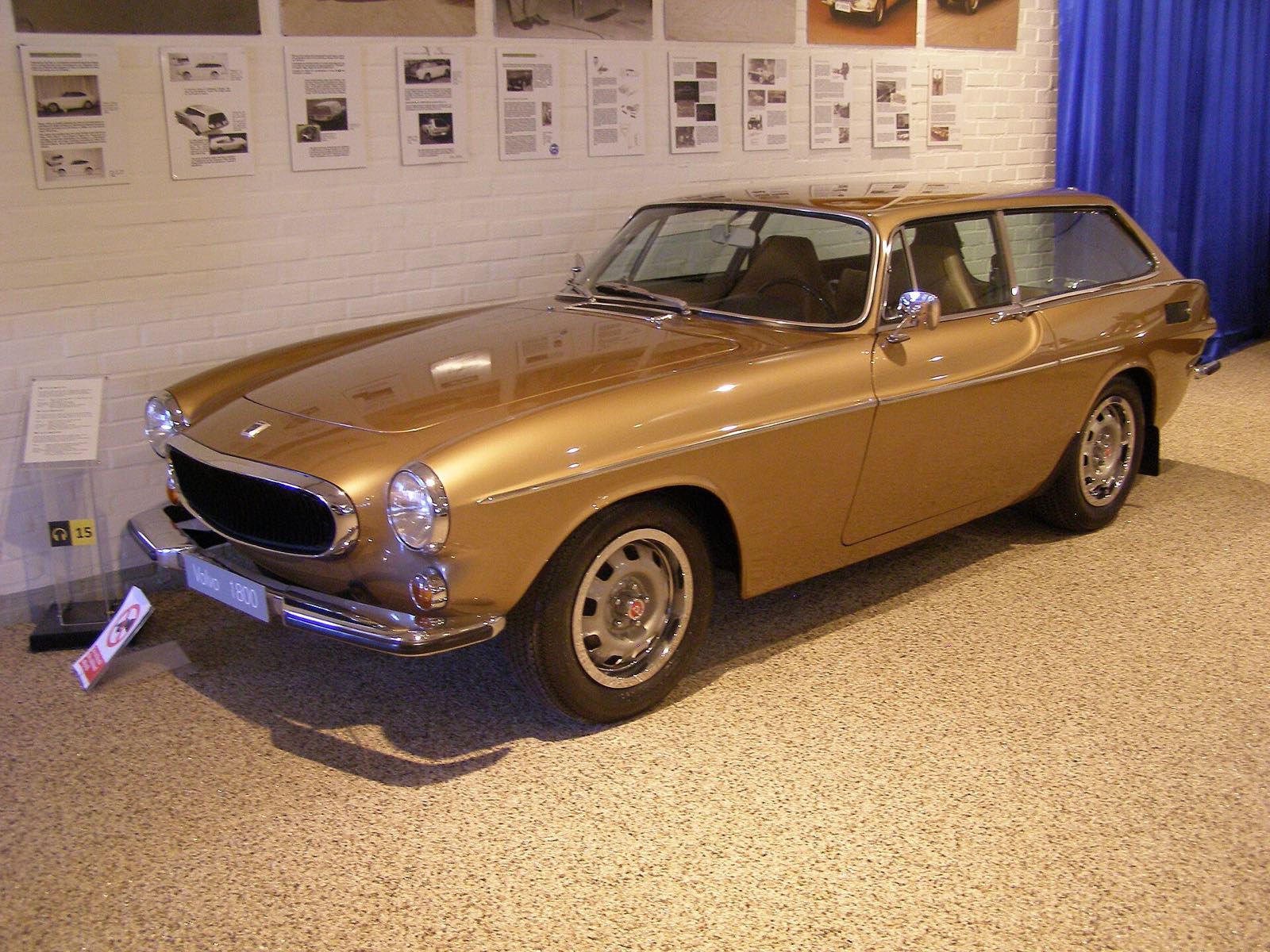
- 4 Volvo 1800 ES at the Volvo Museum, Gothenburg. Photograph by Andrzej Otrębski, CC BY-SA 3.0, Wikimedia Commons.
- 5 Volvo press release, “A true cosmopolitan turns 50. Volvo P1800 1961-2011”, 23 May 2011. A verbatim copy is hosted by the Volvo Owners Club.
- 6 The Volvo 1800 register, on the Italian prototypes and the model's launch: volvo1800pictures.com. It publishes scans and dates of internal Volvo documents from 1957 to 1959.
- 7 Lasse Swärd, “Volvo ger upprättelse åt P1800:s skapare”, Dagens Nyheter, 8 November 2009. It is cited by the English-language Wikipedia article; the full text is behind a paywall and I have not read it.
- 8 The model page at Volvo Cars Media: volvocars.com.
- 9 Production figures from the Volvo 1800 register and the chassis-range table at saint.org.
- 10 The English-language Wikipedia article Volvo P1800, revision dated 25 August 2026.
- 11 49 CFR Part 581, Bumper Standard. The provenance line is 42 FR 24059, May 12, 1977. The dates for FMVSS 215 were checked against NHTSA's An Evaluation of the Bumper Standard, DOT HS 807072, and several independent publications. The NHTSA and Federal Register sites block automated requests from our address, so I could examine the original FMVSS 215 material only through secondary quotations. That limitation is stated here plainly.
- 12 EPA, Timeline of Major Accomplishments in Transportation, Air Pollution, and Climate Change, by model year.
- 13 Volvo Cars press release, “VOLVO 1800ES (1971-1973)”, undated on the page. A verbatim copy is hosted by the Volvo Owners Club.
- 14 Ate Up With Motor, Sainted Swede: The Volvo P1800 and 1800ES. The most detailed open account I found, based on period publications and archival material.